The EPA estimates about 24 percent of waste in landfills is comprised of organics. It is difficult for them to break down in landfills, particularly those in plastic garbage bags. Food waste at landfills produces more than 58 percent of dangerous methane emissions.
According to the EPA - there are steps toward preventing food waste. See their chart below.
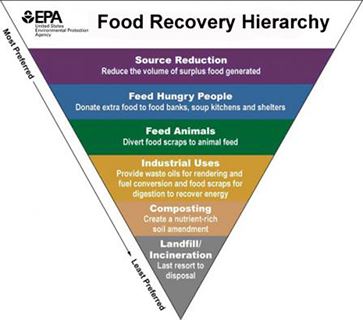
We can help reduce food waste in our community by supporting organizations who feed hungry people, such as food pantries, food banks, and soup kitchens. Reaching out to local farmers with livestock to see if they want any leftover food as feed.
While composting is second to lowest on the chart, it is important for reducing the amount of food scraps, which everyone produces, to the landfill. Composting is the processing of allowing organic waste to break down into a usable material, such as a soil amendment (fertilizer) or mulch.
By composting, you divert organic waste from the landfills and put it to good use by returning the nutrients they contain back to the soil. There are several options for composting your yard waste and food scraps.
- Backyard Composting: If you want a more hands-on approach, you can try backyard composting. This helps save money on mulch and fertilizer for your spring gardens.
- Yard Waste Composting: Find locations that will take your yard waste and put it to good use.
- Food Waste Composting: Find locations and tips for composting your kitchen scraps.
For more information, visit the Michigan Department of Environmental Quality.